
Enter access code
A leadership journey for Argenx's Digital Technologies Leadership Team. Built on movement, honesty, and shared challenge, so the team steering Argenx's digital future trusts itself enough to move as one.
Before this is about leadership, it's about what this team makes possible for people who need it.
Argenx exists to bring immunology-driven therapies to patients who have run out of options. Every system Achim's team builds, every platform, every integration, every piece of infrastructure, is part of the machinery that gets a therapy from the lab to a patient's bloodstream faster.
The company's own Vision 2030 ambition: reaching 50,000 patients across 10 labeled indications, with 5 simultaneous Phase 3 programs in motion, depends on a Digital Technologies function that can move as fast and as confidently as the science does.
That's the case for this investment. Not morale. Not a nice trip. The literal operating speed of a company trying to outrun disease for tens of thousands of people, resting partly on whether 15 leaders trust each other enough to decide fast, together, under pressure.
Three things are true for this DT leadership team at the same time.
DT reorganized into a network-of-teams model. Fifteen leaders , long-tenured and newly arrived , are now expected to operate through it, without anyone having measured whether the trust and communication needed to run it actually exists yet.
Technology leaders build the systems that make the mission possible, but rarely get to stand inside it , to feel, physically and emotionally, why the speed and trust they're being asked for actually matters to someone.
This lands during Argenx's own CEO transition , Karen Massey stepping into the CEO role, founder Tim Van Hauwermeiren moving to Chairman. DT is absorbing internal and company-wide change load simultaneously.
Every other investment Argenx makes , in platforms, in pipeline, in people , passes through the judgment of this team.
Systems get rebuilt. Budgets get reforecast. Roadmaps get replanned. What's much harder to rebuild quickly is a leadership team's trust in each other, once a reorganization has asked them to operate through a structure they haven't yet tested together.
Research across large-scale transformations consistently shows the same pattern: the technical plan is rarely what fails. What fails is the human system meant to carry it , leaders who don't yet trust each other enough to disagree fast, decide fast, and move together once the decision is made.
That is the case for treating this as an investment, not an expense: it is cheaper, by a wide margin, to build that trust deliberately now than to discover its absence in the middle of a critical decision later.
Rekonnekt exists because leadership development built entirely from talking rarely changes how people actually behave under pressure.
Most leadership programs ask people to sit in a room and discuss trust, communication, and collaboration in the abstract. Rekonnekt was built on a different premise: people reveal how they actually lead , not how they describe leading , when they're moving, tired, out of their routine, and depending on each other for something real.
That's why every Rekonnekt experience blends three elements deliberately, rather than picking one: movement (hiking, cycling, physical shared effort that removes the usual office defenses), coaching (structured reflection that turns what just happened into a named behavior change, not just a good memory), and inspiration (guests whose own stories map directly onto the leadership shift the team needs to make).
Founded by Renata Farah and Matteo Bruschi, Rekonnekt designs each journey around a specific team's actual problem , not a fixed retreat format applied the same way to every client. For Argenx DT, that problem is trust and decision speed inside a newly networked structure, so every phase, guest, and route was chosen to work on exactly that.
Awareness has to come before change. A team can't fix what it hasn't first felt together.
Every phase after Como depends on what happens in it. Phase 2 asks people to organize themselves without instructions. Phase 3 asks them to carry real weight, together, for two days. Neither works if the team arrives as fifteen individuals who've never been tested side by side.
Como is where that starts , not with a workshop, but with three days of shared experience: a psychologically safe entry point, guided by a coach who has led organizations herself, alongside a professional athlete whose entire career has been built on supporting someone else's win.
Why not wait for a quieter quarter: the team is being asked to operate in its new structure right now. Every month without a deliberate trust intervention is a month the informal patterns , siloed decisions, unspoken friction, deference instead of debate , have longer to harden into habit.
A single offsite produces a spike in connection that fades within weeks , teams report feeling closer immediately after, then drift back to old patterns once daily pressure returns. That's the argument for a phased journey, not a one-off event: behavior change needs repetition, real stakes, and space to practice between moments of intensity.
Every phase has a job. Together, they form a single ascent , not four unrelated events.
The team meets as a whole for the first time outside of a screen or a reorg announcement. The goal of Phase 1 is not to solve anything , it's to build the shared floor everything else stands on: that this team can be honest with each other, and that this journey is worth their trust.
Two guests set the tone. Cathleen Mancino , a leadership coach who spent 26 years running a software company before coaching executives , brings the discipline of someone who has actually carried the weight this team carries. Jack Haig, a professional cyclist riding for INEOS Grenadiers, brings a different kind of proof: a career built almost entirely on supporting someone else's win, not his own.
Between Phase 1 and Phase 2 , one to two 1:1 virtual coaching sessions per person with Cathleen Mancino, plus a check-in from Jack Haig, live from the Pro Tour season.
This is where the team starts to operate like a team, before anyone tells them to. Small groups are assigned in advance, at random , not by function or friendship , and it's left to them to organize their own travel, accommodation, and daily rhythm. The hike itself is the least important part of Phase 2; how the team organizes around it is the actual content.
Roberta Muricy transforms Argenx's purpose from something the team knows into something they truly experience.
Living with dystonia and working as a health coach, she embodies the impact of resilience, possibility, and human potential. Throughout the experience, she will cook for the group, set the pace on the trail, and openly share how she has built a fulfilling life and career by adapting, not by surrendering to limitations.
Something powerful happens along the way. The team does not see a patient. They see a leader. They naturally follow her pace, her energy, and her example.
In that moment, the work of Argenx is no longer about science, research, or innovation alone. It becomes about people. About restoring possibility. About giving individuals the chance to continue leading, contributing, and living life on their own terms.
This is when the mission stops being a statement and becomes a shared conviction.
Between Phase 2 and Phase 3 , continued 1:1 coaching with Cathleen, and a second Pro Tour catch-up with Jack, this time closer to a Grand Tour.
This is the team's wrap-up test, not a celebration lap. Two days, real weight on real backs, no support vehicle waiting around the corner. Manuela Vilaseca guides the route; Jack Haig follows the team as its pace, not its leader , closing the loop on the role he set up back in Como.
By this point the team has practiced organizing itself under low stakes (Phase 2). Phase 3 raises the stakes to something physical and shared: if the team hasn't built real trust by now, 32km with a full pack will surface it fast.
Final coaching pass with Cathleen , individual commitments, made explicit, ahead of the celebration.
The pinnacle event isn't a reward for finishing , it's proof, made visible to the rest of the organization. A year after fifteen leaders met as strangers inside a new structure, they stand in front of their peers as a team that chose to become one, on purpose, together.
Every guest is chosen because their story maps onto a specific leadership behavior this team needs , not because they're inspiring in general.

26 years as CEO of a software company before moving into executive coaching. Brings the discipline and candor of someone who has run the kind of organization this team is trying to build , not a facilitator borrowing the language secondhand.
LinkedIn →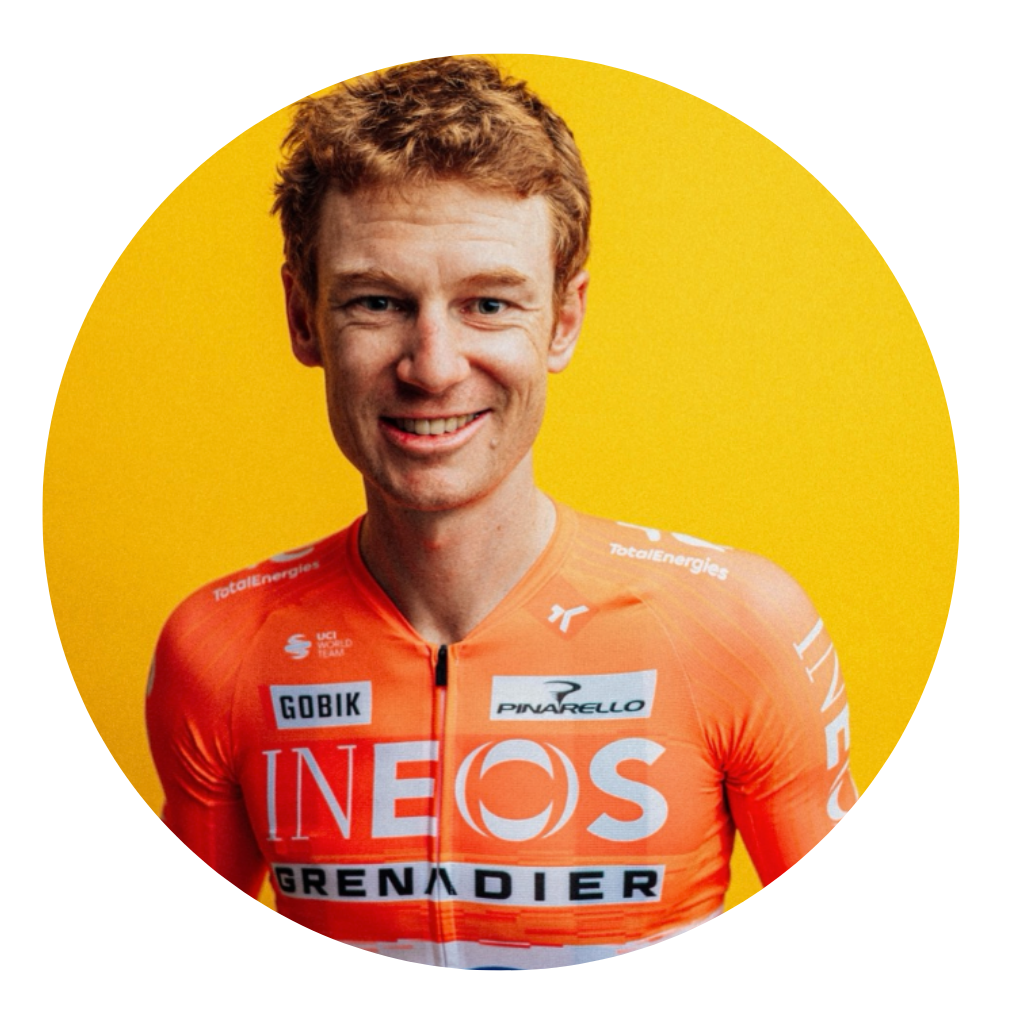
A decade at the WorldTour level, with a third-place finish at the 2021 Vuelta a España to his name. Known across the peloton as one of the sport's most trusted domestiques , a rider who has built his career on the discipline of supporting someone else's win, and increasingly on guiding younger riders through the biggest races in the sport. That's the leadership lesson: influence without needing to be the one on the podium.
@jack_haig →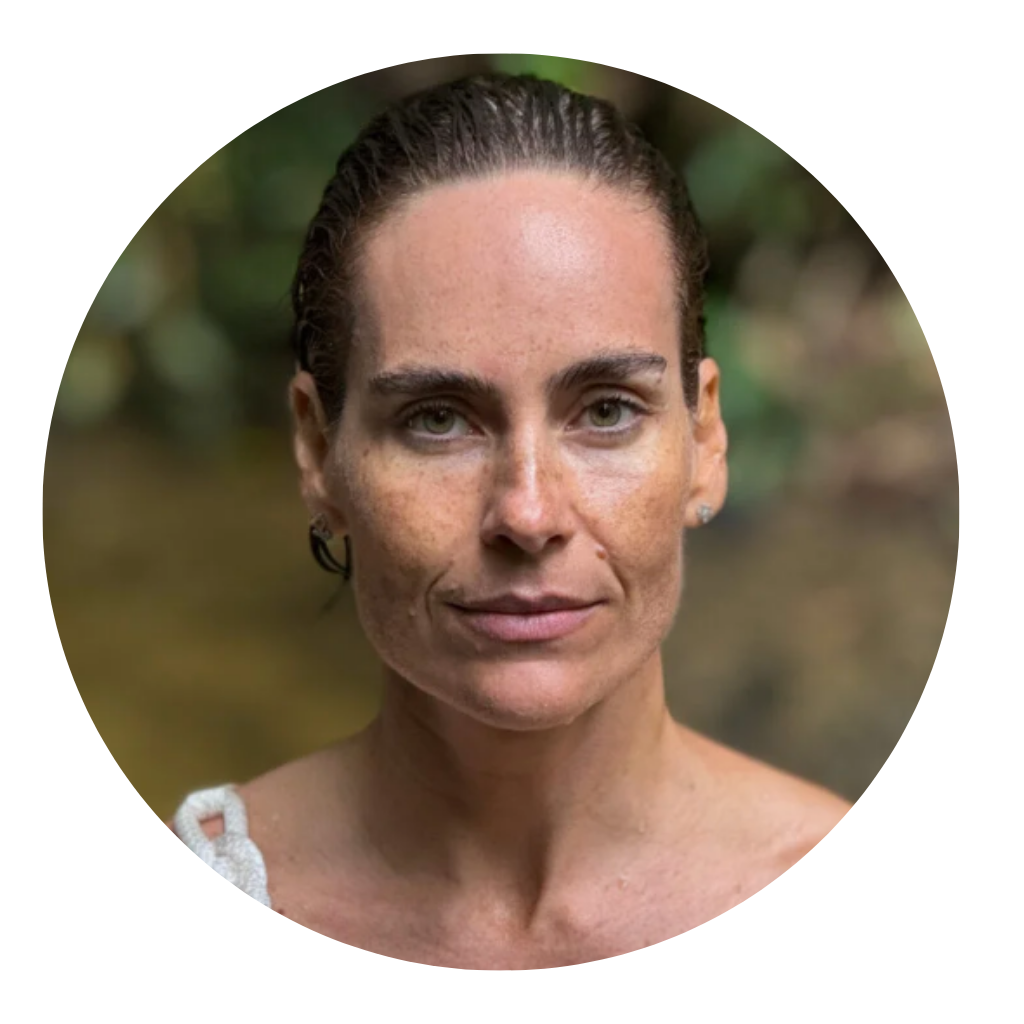
Trained in gastronomy at Gambero Rosso in Rome and certified in Health Coaching through the Institute for Integrative Nutrition in New York, now deepening her study of Ayurveda. She lives with dystonia, and leads anyway , cooking for the group, setting pace on the trail, and speaking from experience about building a career and a life around adapting, not around what's been taken away. The team follows her lead.
robertamhealthcoach.com.br →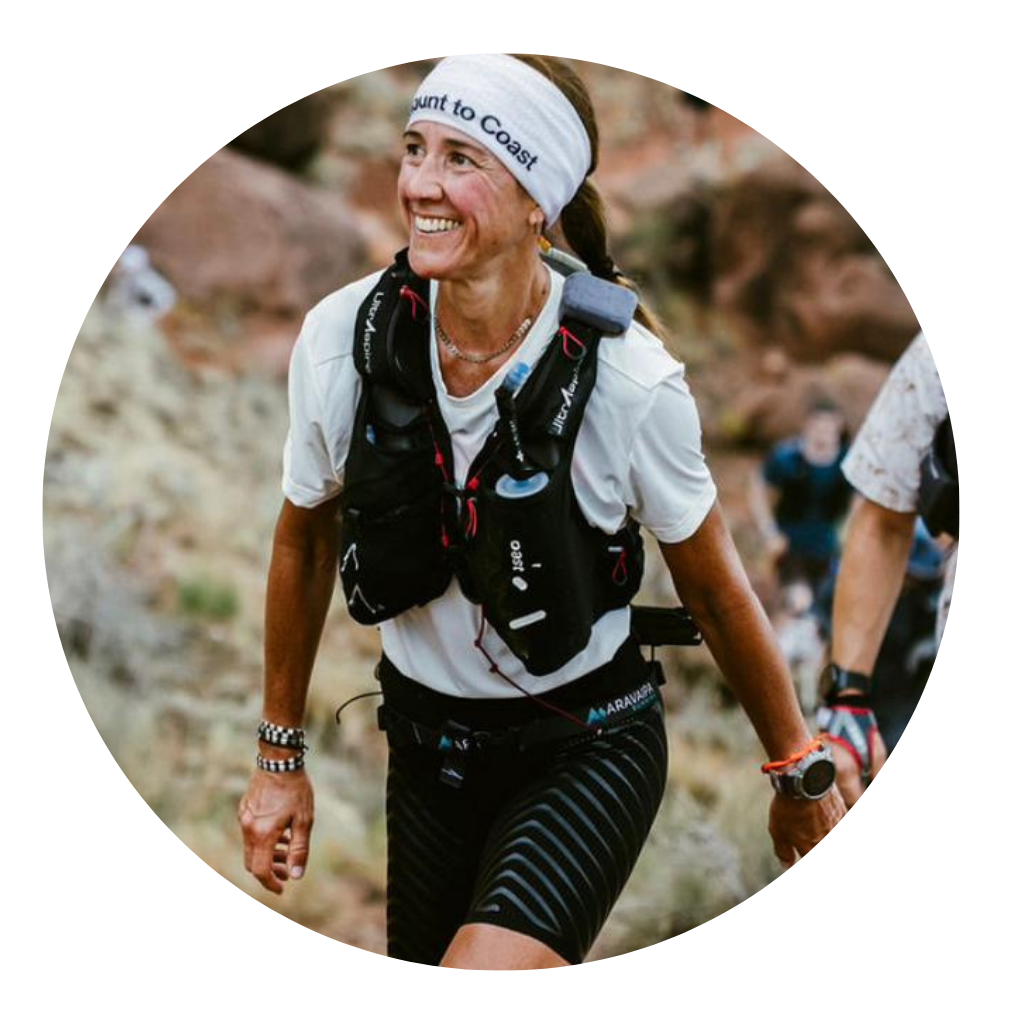
A Brazilian ultra-trail runner and coach now based in Catalunya , the same region that hosts Phase 3. Her race record includes UTMB and the Cocodona 250, and she coaches other endurance athletes when she's not racing herself. She leads the Phase 3 hut-to-hut route through the Catalan Pyrenees , the team's final, physical test of everything built across the two phases before it.
@manuvilaseca →Renata and Matteo don't hand this journey off to guests and walk away , they design and run every phase alongside them.
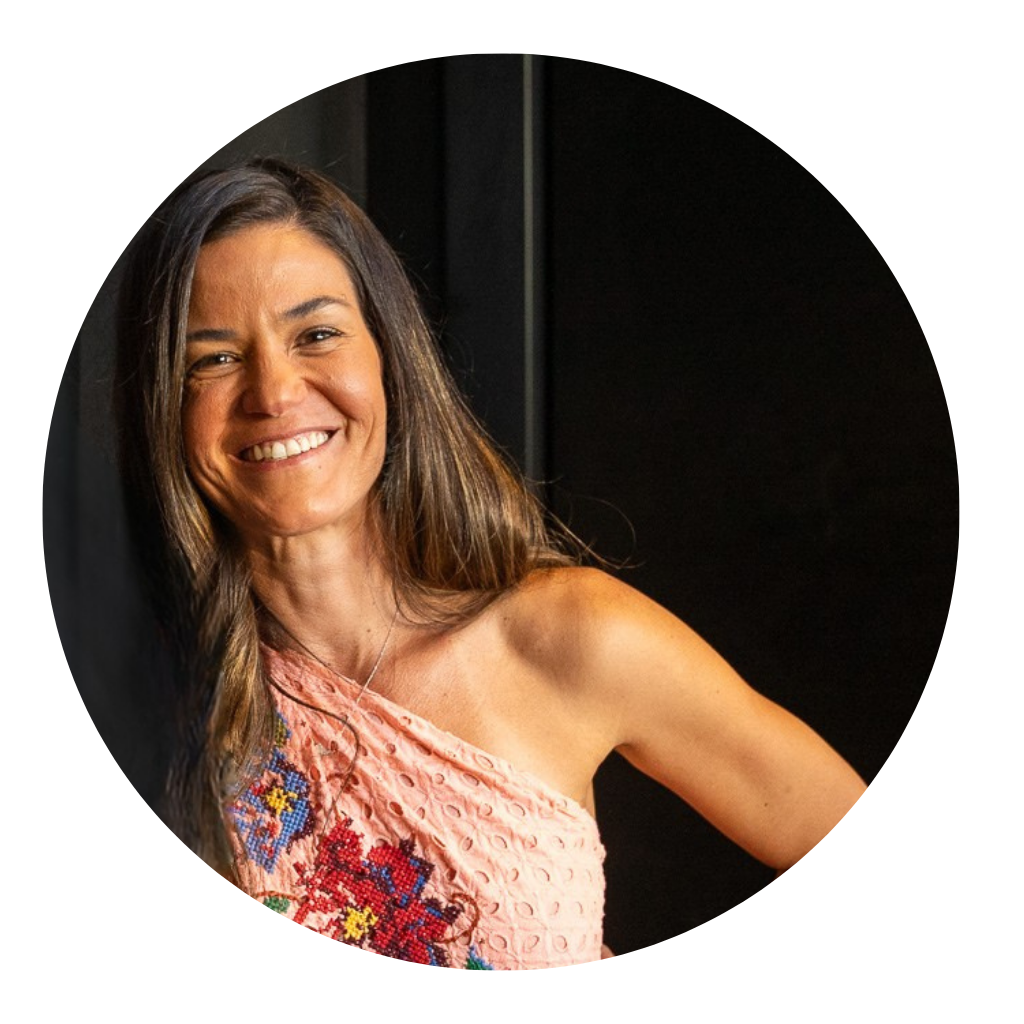
Founder of Rekonnekt and architect of this program , the throughline connecting Achim's team, Argenx's context, and every phase of the journey back to the leadership outcomes this is built to deliver.
LinkedIn →
Co-founder of Rekonnekt, leading sport and movement design , the person who turns a hike, a route, or a shared physical challenge into a deliberate leadership mechanism, not just a nice day outdoors.
LinkedIn →Directional benchmarks, not Argenx-specific promises , sized to show the category of risk and return this journey addresses.
Como is nine weeks away. One year from now, this team stands in front of the rest of Argenx as proof that it chose to become an A-Team on purpose.